
Your credit score is one of the most powerful numbers in your financial life — yet many Canadians still don’t fully understand how important it is. It’s not just about getting approved for a mortgage or buying a home. Your credit score can impact car financing, rental applications, credit cards, phone plans, furniture financing, appliance purchases, electronic items, and even the interest rates banks and lenders offer you. Whether you’re a first-time home buyer, planning to upsize, or looking to invest in real estate, your credit score is one of the first things every lender and financial institution reviews before making a decision. Understanding and improving your credit today can create better financial opportunities for your future.
📊 What Is a Credit Score in Canada?
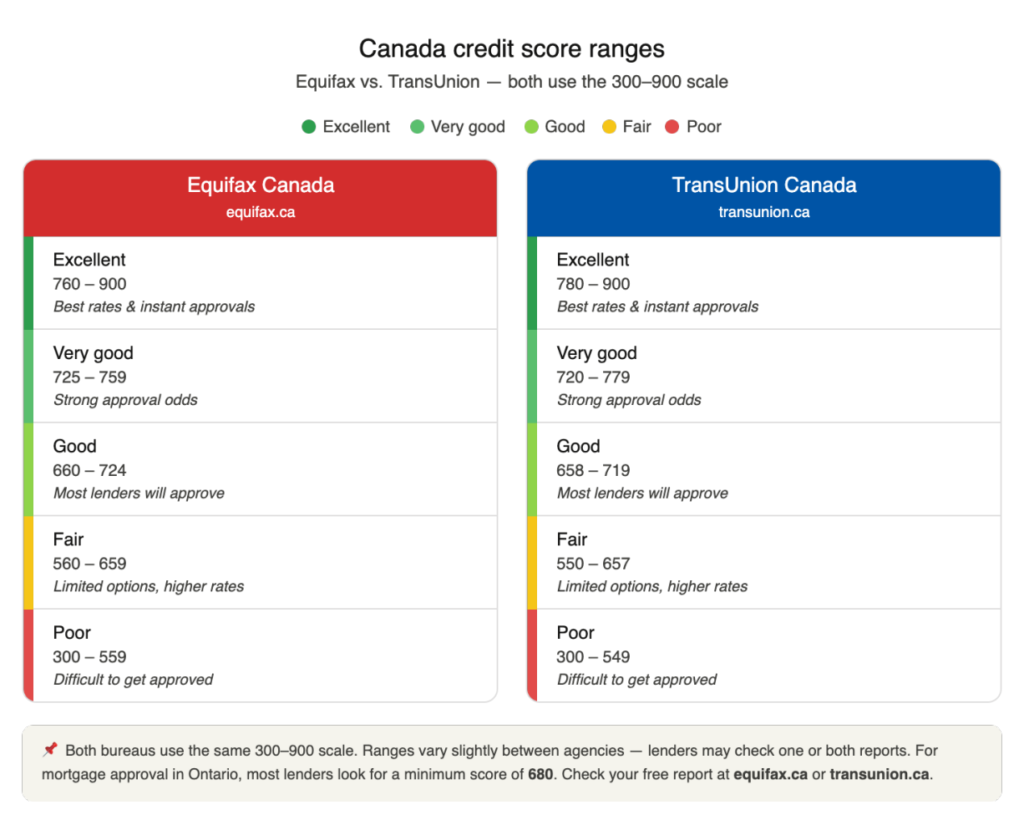
Credit scores in Canada range from 300 to 900, and are calculated by credit reporting agencies based on your credit report. The two main bureaus in Canada are Equifax and TransUnion — and lenders use both to assess your financial trustworthiness.
What Factors Affect Your Credit Score?
According to Equifax, your payment history plays the most prominent role in calculating your credit score. But it’s not the only thing that matters. Here are the five key factors:
1. Payment History (35%) — Do you pay on time, every time?
2. Credit Utilization (30%) — How much of your available credit are you using?
3. Length of Credit History (15%) — How long have your accounts been open?
4. Credit Mix (10%) — This includes cell phone bills, credit cards, auto loans, consumer loans, and mortgages.
5. New Credit Inquiries (10%) — How often are you applying for new credit?
Good credit is not something you’re born with — it’s something you build. Here’s how.
Step 1: Start with the Basics — Open a Bank Account
It sounds simple, but this is where your financial story begins. Lenders view chequing and savings accounts as signs of financial stability and responsibility.
If you’re just starting out, opening a bank account is one of the first steps toward building a credible financial history. From there, a secured credit card or student card can help you begin establishing credit — even before you’re thinking about a mortgage.
Bottom line: You can’t build credit without showing up in the financial system. Start early.
Step 2: Pay Every Bill — On Time, Every Time
This is the single most important factor in your credit score.
Whether it’s your credit card, hydro bill, car payment, or cell phone — late payments leave a mark. And that mark can follow you for years.
Many Canadians fall into the trap of spending beyond their means and then scrambling to make minimum payments. This creates a cycle that becomes harder and harder to escape. The rule is simple: don’t charge what you can’t afford to pay back.
Set up automatic payments. Create calendar reminders. Do whatever it takes to make on-time payments a non-negotiable habit.
Step 3: Check Your Credit Report Regularly
In Canada, you’re entitled to request your credit report for free from Equifax and TransUnion — the two major credit bureaus.
Your credit report is a complete picture of your financial obligations — every account, every inquiry, every payment history. This is what banks and mortgage lenders review when you apply for financing.
Don’t wait until you’re applying for a mortgage to find out there’s a mistake on your report.
Review it at least once a year, and look for:
- Incorrect personal information
- Accounts you don’t recognize (potential fraud)
- Errors in payment history
- Outdated negative items
If you spot something wrong, dispute it directly with the credit bureau. Getting errors corrected can meaningfully improve your score.
Step 4: Stay Below Your Credit Limit
Your credit utilization ratio — how much of your available credit you’re actually using — is one of the key factors lenders look at.
The general rule: keep your balance below 30% of your credit limit.
If your card limit is $5,000, try to keep your balance under $1,500. Maxing out your cards — even if you pay them off monthly — can signal to lenders that you’re financially stretched.
When possible, use cash or your debit account for everyday purchases. Reserve credit for planned expenses that you can confidently pay off. And if you ever need to use credit in an emergency, prioritize paying it off as quickly as possible.
Why This Matters in Real Estate
In Ontario’s housing market, your credit score can be the difference between:
✅ Getting pre-approved at the best rate
✅ Qualifying for a higher purchase price
✅ Securing financing with flexible terms
…or being declined entirely.
Whether you’re a first-time buyer, a move-up buyer, or looking to invest in property — your credit health is the foundation that everything else is built on.
If you’re thinking about buying a home in the next 6–24 months, now is the time to start preparing your financial profile. The stronger your credit going in, the more options you’ll have when it counts.
Ready to Take the Next Step?
If you have questions about what lenders look for, how to prepare financially for a home purchase, or what the buying process looks like in today’s market — I’m here to help.
Let’s connect and make your homeownership goals a reality.
Connect with me today!